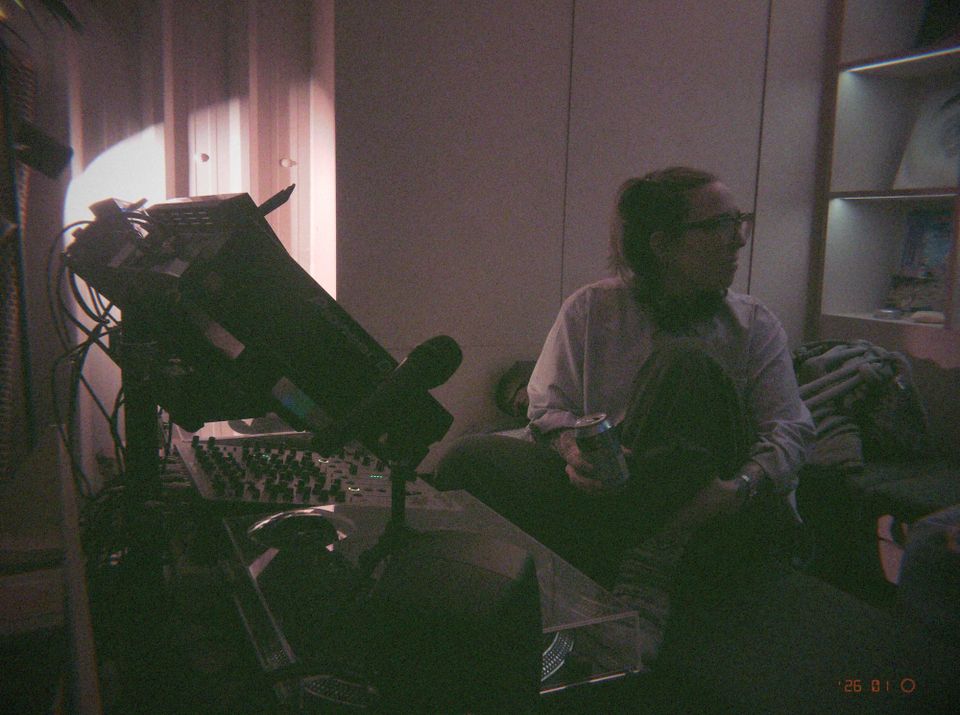
In the booth: MAÏS
I've got a busy Saturday coming up. I'm double-booked, which is fairly common, but it's the first time in a while that I've been desperate to see out the full event at two different places.
First up, I have Leese Geese. Secondly, I'm supposed to be seeing Daria Kolosova, one of my favourite DJs, at Fabric.
A good crowd can elevate almost anything. A room full of people who are tuned in, open, and responsive can turn a small show into something memorable. The opposite is also true. A big DJ and a bad crowd can fall flat, like all the ingredients are there but the chemistry is missing.
That is where things get interesting, and where decisions get harder.This weekend is a perfect example of that tension, because I'll need to divide my time up between my friend's event, Leese Geese: something built from a personal place, a room filled up by people I know and like, where the atmosphere is likely to feel warm, loose, and unforced. On the other side there is Daria Kolosova at a big club, a DJ I really rate, someone I would usually make an effort to see, especially in a setting designed for scale and intensity. Last year I saw Daria Kolosova at Colour Factory and she was unreal.
On paper it is not even a question. One is a favourite DJ in a peak-time environment. The other is a friend’s night with a known crowd dynamic. But that is exactly the point. It is not on paper. It is in feeling, timing, and context.
Because what I find myself thinking about more now is not just what I will hear, but how I will experience it. At the friend’s night, I know there will be a sense of familiarity, ease, and shared investment. At the club night, I know there will be scale, energy, and unpredictability, but also someone's going to be stepping on my feet all night, which is a particular type of torture.
Realistically, I think I'll probably try to see out the entire night at Leese Geese and then link up with friends to see Daria Kolosova, but I guess you'll have to wait for me to report back to see how that goes.
From running the show to owning it
The owners behind festival Shambala have transferred it to a crew of employees, making it the first employee-owned festival in the UK. This is good news for those employees, because it's rare that your workplace just decides that you own it now, but it's also good news for people tired of watching their favourite festivals change for the worse after a big money acquisition or just flat out disappear because it wasn't making its profit margins.
It's a glimmer of sunlight in what is a fairly gloomy time for dancing as big companies gobble up most of the nightlife in sight.
I should be clear here: I'm not anti-big company. It's hard to imagine a small DIY collective running something like Drumsheds, after all. But I am anti-monopoly, because I think for nightlife and parties to thrive, there needs to be a solid mix of big and small parties with different people creating their idea of a good time so consumers have plenty of options.
You don’t need to be particularly left-wing to see the problem. When too much power sits in too few hands, scenes stagnate and risk disappears. Culture gets flattened into something safe, predictable, and easy to sell.
There are already signs of how this plays out. A significant chunk of the UK festival circuit now sits under Superstruct Entertainment, which was acquired in June 2024 by KKR. That matters, not just because of consolidation, but because of what those investment chains connect to. KKR has faced scrutiny for its links to Israeli arms companies, leading to a boycott of 2025's Field Day festival that artists signed up for the 2026 version seem to have forgotten about, and for its stake in the Coastal GasLink pipeline, which sparked the 2020 Canadian pipeline and railway protests, which sparked the 2024 documentary Yintah.
You can argue about where you land on those issues, but the uncomfortable reality is that going to something like Boiler Room, Mighty Hoopla, Field Day or Lost Village now comes with baggage it didn’t used to have. Nights out are starting to feel like endorsements, whether you want them to or not. There's no ethical consumption under capitalism, sure, but I prefer going out to dance without having to think about whether my cash is going towards assembling weapons that are going to kill people so selfishly, that's where I draw my line.
I've never been to Shambala. Many of my friends go each year, but it takes place on the same weekend I'm in Germany for my day-job each year, meaning I'm stuck getting FOMO while my friends describe it as one of their favourite weekends each year. Regardless, that exhaustion with the companies monopolishing the dancefloors now makes Shambala feel so important, not as a utopian fix, but as a potential blueprint for a different model of ownership.
Because ownership isn’t just a technical detail, but something that shapes what a festival becomes. When a festival is owned by a private equity-backed company, its success is ultimately measured in growth, returns, and exit potential. When it’s owned by the people who actually build it, programme it, and run it on the ground, (usually) these priorities shift. That doesn’t mean that profit disappears. It means profit stops being the only thing that matters.
A worker-owned Shambala is more likely to take risks on artists that don’t immediately flog tickets. It’s more likely to invest in the parts of a festival that don’t show up on a balance sheet but make a weekend feel special: the oddities, the small details, the sense that someone actually cares. It’s more likely to think long-term, because the people making decisions aren’t trying to inflate the value of an asset, they’re trying to build something they’ll still want to be part of in five or ten years.
I've never worked on a festival so can't talk about what it will actually change to work there, but please feel free to email in if you have opinions on this you want to share. For punters, the impact is less direct but just as real and will likely be something you feel over time rather than notice in a single lineup announcement. I think of Secret Garden Party, who saw off their final festival with one of the most impressive firework displays I've ever seen at a no-doubt obscene cost because, hell, the spectacle was the most important part.
So, my hope is that Shambala will continue much as it is, a festival without the creeping sense that everything is being optimised for scale. That means that to me, this isn't just a nice story about Shambala doing something cool. It's a potential proof of concept, a reminder that the way things are currently structured isn't an inevitability.
Because the alternative to monopoly isn’t just nostalgia for the DIY days of old. It’s to come together and build new models and systems that can actually survive in the present. Worker ownership is one of those models. It's not the only one, and Shambala will face the same challenges it has already been facing each year, the very same facing promoters worldwide, but it does feel like a meaningful shift in where power currently sits.
Better yet, it does create space. Space for a different set of priorities, and for decisions that aren't purely driven by the need to extract value. Maybe even space for culture to feel like culture again, rather than a product.
And right now, that space feels increasingly rare. So rare that even a glimmer of something better is worth paying attention to.
The Mix
This week's mix is from our In The Booth guest MAÏS.
I think it’s a pretty honest snapshot of me as a DJ: the sounds I keep coming back to when no one’s telling me what to play. This all-vinyl mix moves through that sweet spot I’m always chasing, elegant but with a bit of weight to it, a groove that sneaks up on you rather than demanding attention.
As ever, if you're reading us on the website you can click the big play button below, if you're reading the email you'll have to click here.
In the Booth - MAÏS
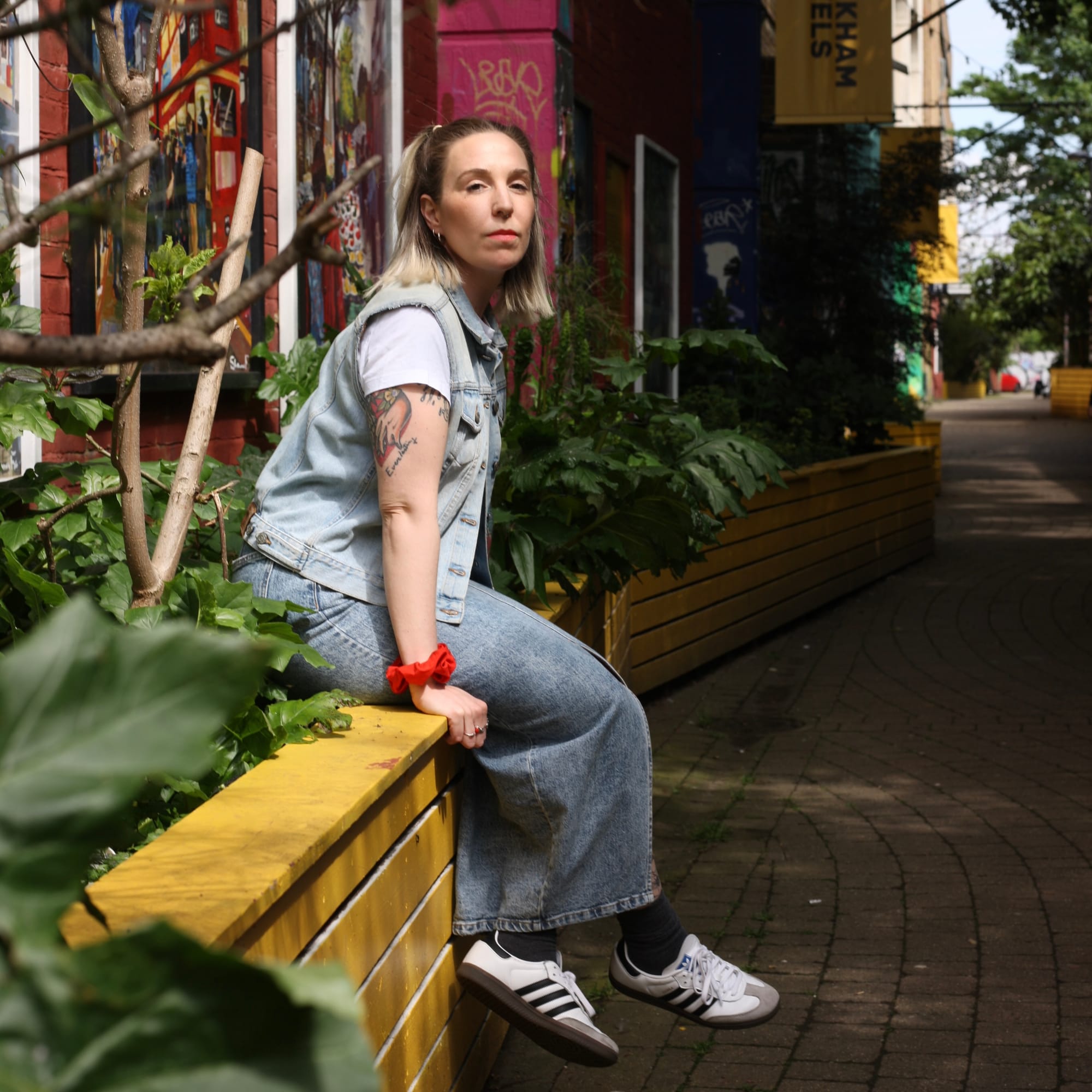
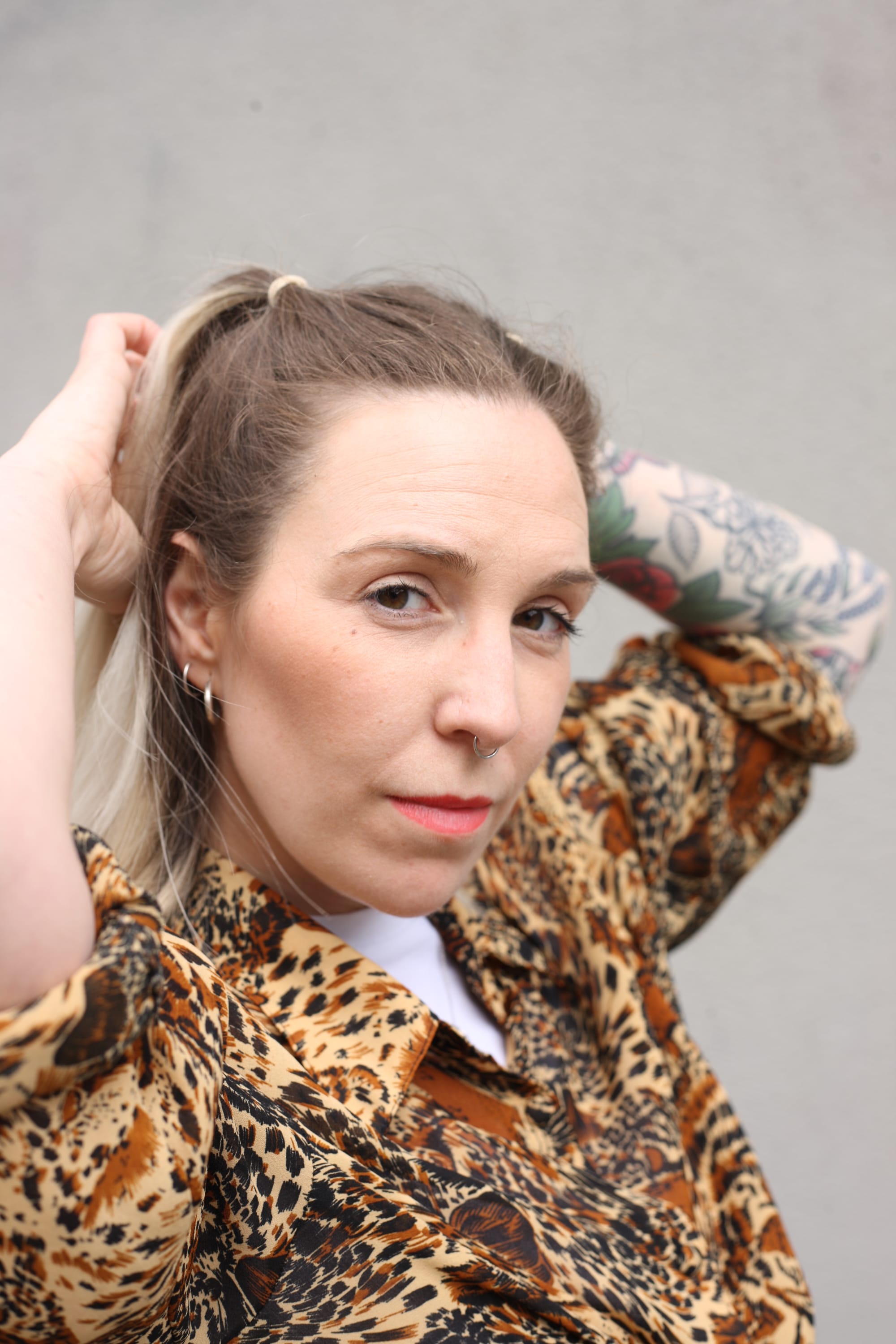
Sometimes people can feel like entirely different versions of themselves depending on the context you know them in. If you’re a FrontLeft reader, you’ll probably recognise MAÏS as the eye behind many of the photographs that run through these pages. To me, she’s Maria, one of my best friends. If you’ve seen her DJ, you’ll know her for sets that are groovy, soulful and quietly elegant, music that invites you in rather than demanding your attention.
The thread that runs through all of it is connection. Whether she’s behind the decks, in the middle of a crowd with a camera, or sending me a frankly astounding number of WhatsApp stickers.
You can see MAÏS at her event Leese Geese on May 2 down in Tooting or Mirror Moves on May 16 over at Hoxton Cabin. Here she is, in her own words.
What is your earliest memory of dance music?
I think I was probably around 12 or so. My brother used to be a DJ, and I was often around as he prepared his DJ sets or played around in Virtual DJ. He played mostly breakbeat and DnB, and while the music never connected with me, he had a couple of songs I really liked and would ask him now and then to play them for me.
What’s the first track that made you understand what a dancefloor could do?
Maybe not the first track, but definitely one that gave me an “epiphany” moment: Caribou's Can’t Do Without You. I saw Caribou live at Primavera Sound 4 years ago and they closed with this track. They had built up so much energy during their set, and they took everyone on an incredible journey. Finishing with this track was like a massive hug to the whole audience, and you could feel that energy all around you, it was beautiful.
When was the last time a crowd surprised you?
Last January I played a set for Vesper Nights at The Greyhound. I was opening and I was really nervous as I was playing on vinyl. After just a few tracks, I realised there was a full dancefloor and people were locked in, heads down and shoulders loose. It was really rewarding to see people really vibing to what I was playing and to see the dancefloor fill and stay full for my whole set. I think it was probably one of my favourite sets I’ve played out.
What part of you only exists on a dancefloor?
I think my on-the-dancefloor self doesn’t differ much from my outside-the-dancefloor self. I love to connect with people in and outside the dancefloor, so even when I’m dancing I’m always looking for some kind of contact, physical or not. I don’t like dancing on my own!
What song do you keep in your back pocket to cause trouble?
For every night I play at, I always prepare a playlist called “Temazos”, which means bangers in Spanish. Pancratio's Automatic House has made the cut for the Leese Geese Temazos folder, so you might hear it if you come next Saturday. I’ve been obsessed with that track since it came out and it’s such a good breather for the dancefloor.
Who's your partner in crime?
Definitely my friend Angela. If you’ve been out with me, there’s a high chance she was there too. We met very randomly and we clicked from the beginning, I sometimes describe her as my Yang, she's all energy, and I'm the opposite. She’s the kind of person that would always say yes to any plan, and she’s also great fun so what else can one ask for!
Why do you dance?
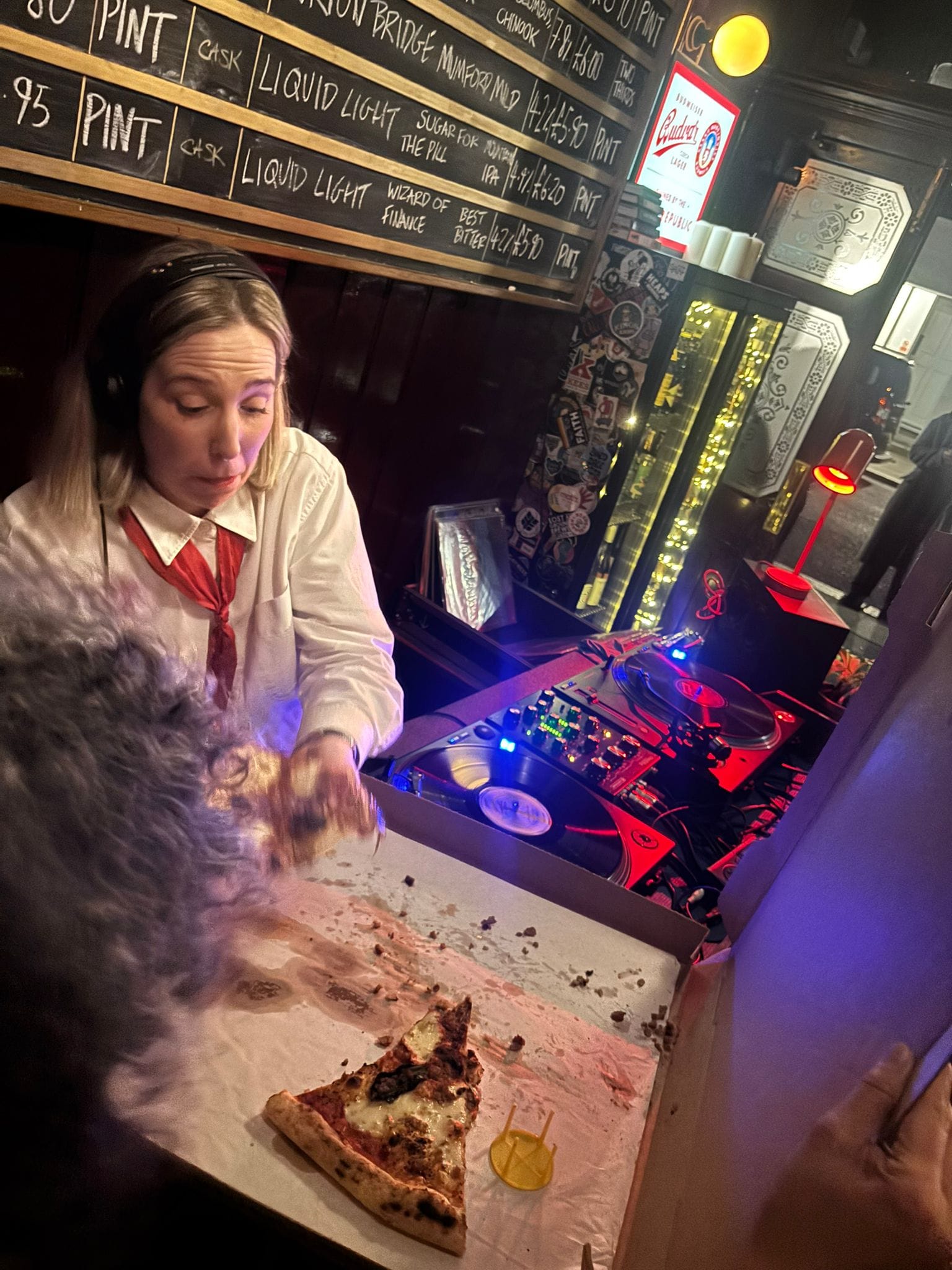
Because it makes me happy. I have been a fan of electronic music since I was young, but I only got to enjoy live electronic music when I moved to London. I've never looked back. I love the way music lets you get lost in the the groove, and when that happens, I can fully let myself go. Music is my refuge.
You seem to be transitioning to mix more on vinyl. What draws you to it over digital?
It’s a different craft. Since I started mixing on vinyl in 2025, I listen to music differently, I pay a lot more attention to small details in songs that I didn’t used to before, and also, in my opinion, you connect better with the music. The colours of the labels, finding the groove, beatmatching by ear… I also think it’s a lot more fun, even if it's a little more stressful, but who doesn’t love to work under pressure?
What’s your process when you’re digging now?
There’s not really a process, there’s a lot of luck involved. I tend to let myself get guided by music labels or artists I already know, or I look for genres I like. The problem with genres is that the same genre could be very different depending on the year it was released, or the location it was made in. I’m a visual digger too so if I like the artwork there’s a high chance that record will go into my listening pile.
Do you approach record shops differently to how you approached online digging?
Digging in record shops requires time and attention, which I think is what makes playing on vinyl a lot more special than playing digital. You select the record, you play it, you spend time deciding if you like the tracks or not, and if it’s worth spending the money on that record, as you might only like 2 of the 4 tracks. I always say that my record collection is not that big, but I find myself discovering great songs that I didn’t know I had every time I put a record on, something that doesn’t happen as often on digital as songs get swallowed up in playlists.
What’s something vinyl has taught you that digital never did?
Definitely to use my ears more. I used to rely a lot on the screen on the CDJs when I started DJing, trying to beatmatch by ear at the beginning was a huge challenge. Since I have started mixing more on vinyl my digital mixing has also improved a lot, and I have also learned to let songs breathe and play out a lot more and just enjoy them rather than cutting them short to pack as many as I can in a mix.
What's on?
I’ve been rethinking what a “What’s on” section on FrontLeft should actually be. It’s easy to throw together a list of events and call it a day, but that’s not the point. It should reflect the scenes and communities we care about, and give you something worth paying attention to.
So from next week we’re changing it. Expect a tighter edit of the best shows, grassroots parties, new venues to check out or even an exhibition that might be worth checking out. All this and everything in between, pulled into one place with a bit more intent behind it. Thanks to everyone who emailed in with thoughts. This next version is for you as much as it is for us.
This bank holiday is seeing the return of day parties, as several places are rolling parties that blow through the day all the way through to the early hours of the morning. I've flagged these parties, but many of them have a day and a night segment.
I'll be steering clear. This weekend I’m trying to take it easy before a work trip to Los Angeles, but I’ll still be stopping by Leese Geese, then heading to Fabric to catch Daria Kolosova. If cloning ever becomes an option I’ll be at E1 as well, watching Adela and Benebe. Until then, choices have to be made. Hopefully your choices are good ones.
Friday
FOLD X ILIAN TAPE (EXTENDED) Fold
Glint 003 with L-Vis 1990, KORANTEMMA, Rabz + Shivum Sharma b2b Budalagi Carpet Shop
Ben Sims, The Lady Machine & Bailey Ibbs Palais
Saturday
FOLD X Tech Couture X 24 Hours (day party) Fold
Queen's Yard Summer Party 2026 (day party) Hackney Wick (various venues)
M.O.T → Batu, Mad Professor, DJ Flight, Simo Cell, Dj Babatr, DJ SWISHA, Jossy Mitsu (Open Air) (day party) Venue M.O.T
Wigflex 20 Years x pressure control: John Talabot, Ivan Smagghe, Lukas Wigflex + more (day party) Gaffe
Parable: Etienne de Crécy, Joris Delacroix, Adela, Benebe E1
Leese Geese 3.0 (free party) Tooting Mezzanine
Sunday
Pherotone 1st birthday with Madelic & Elianne Venue Mot
BANK HOLIDAY EXTENDED FEST 21h (day party) Starlane Pizza
Maya Jane Coles & Friends Palais
What else?
- A survey from the BPI earlier this month has revealed that music is the UK's biggest source of cultural pride. It got wider attention when the Music Venue Trust reposted it last weekend. Sure, some of that pride is probably directed at Harry Styles or Dua Lipa, but there's a ton of great UK-based DJs too, so lots to be proud of.
- Campaign group Protect Brockwell Park has kicked off another legal fight against Lambeth Council’s decision to grant planning permission to a host of summer festivals, including Cross The Tracks, Field Day and Mighty Hoopla. They did the same last year, raising £30,000 via crowdfunding, but the festivals went ahead regardless.
- "A raccoon family ate our insulation," claims Berlin venue Blue Velvet, as they plan to host a fundraiser to repair damage incurred over the winter that actually looks more serious than you might expect from Waschbär attack. Irrelevant for London clubbers, but I don't think I'll get to write about raccoons destroying a club ever again, so I'm taking my chance.
Member discussion